

Many casino visitors believe they can outsmart the house with special strategies or by following lucky streaks. While some games allow skilled players to reduce the house edge through optimal play, probability cannot be completely beaten in casino games due to built-in mathematical advantages. The allure of potentially conquering randomness keeps millions of players returning to casino floors worldwide.
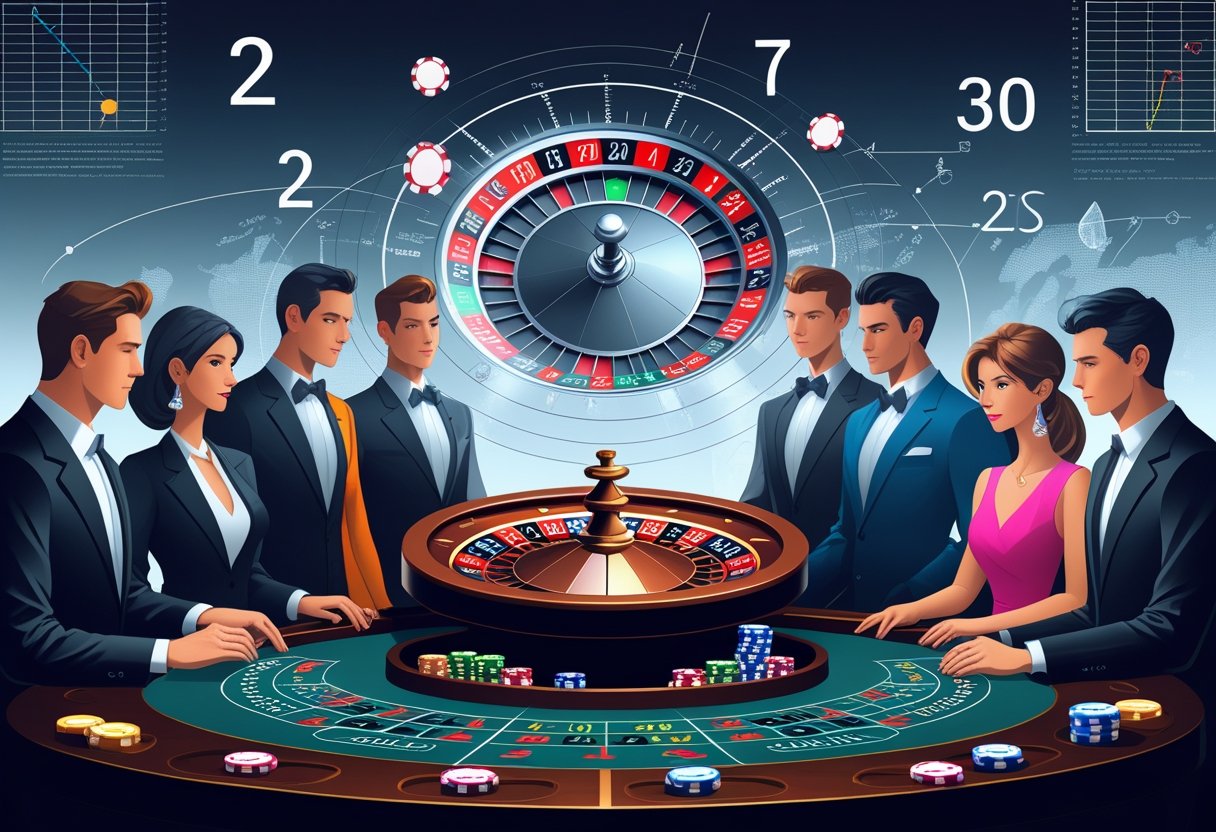
Casino games operate on mathematical principles that determine every outcome. Understanding how probability works reveals why casinos maintain consistent profits despite individual player wins. The house edge ensures that over time, the casino will always have an advantage regardless of short-term fluctuations.
This exploration examines whether genuine strategies exist to overcome casino odds, analyzes real-world cases of players who claimed success, and separates mathematical reality from gambling myths. The relationship between skill, luck, and probability creates a complex landscape that deserves careful examination rather than wishful thinking.
Understanding Probability in Casino Games
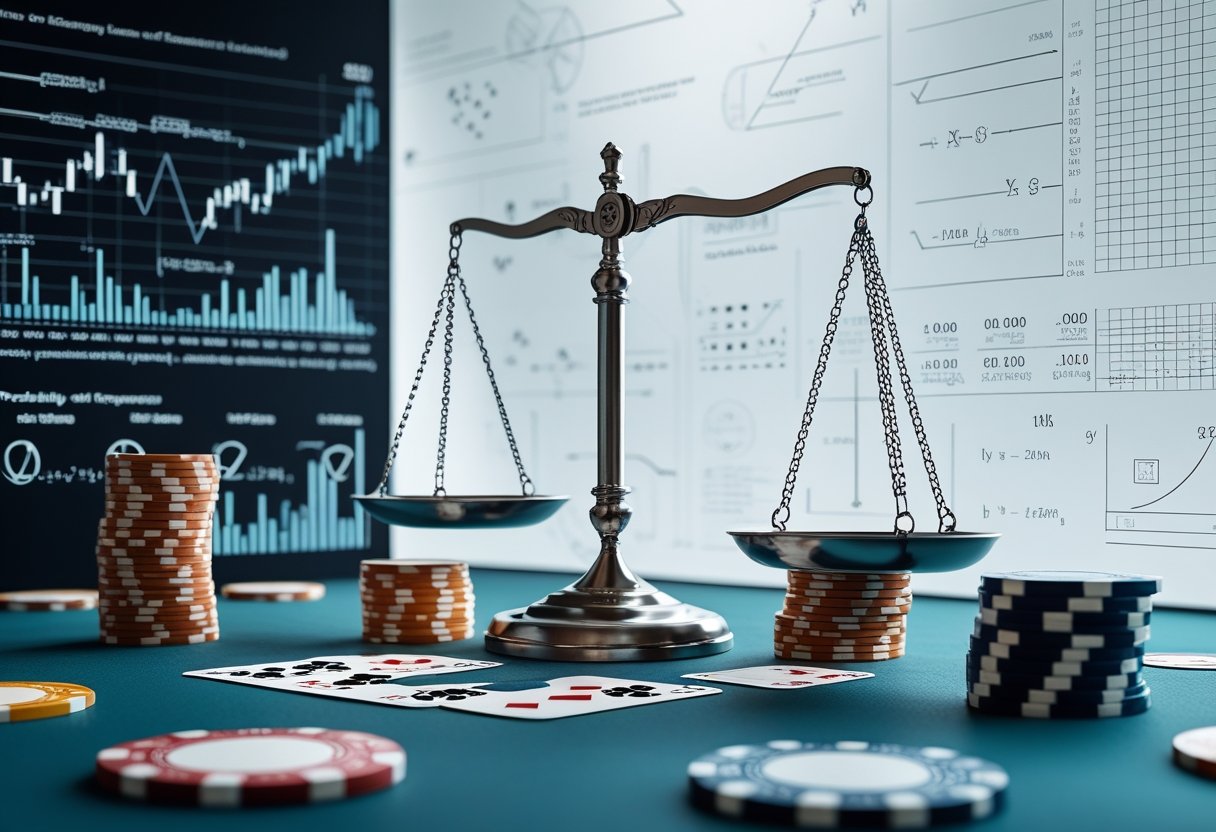
Every casino game operates on mathematical principles that determine the likelihood of specific outcomes. The house maintains its advantage through carefully calculated odds, while true randomness ensures that each game event remains independent of previous results.
How Probability Shapes Game Outcomes
Probability determines the exact chances of winning or losing in every casino game. In European roulette, the probability of hitting a single number is 1 in 37, which equals 2.7%.
Blackjack probabilities change as cards are dealt. When fewer high cards remain in the deck, the probability of getting a strong hand decreases. This creates shifting odds throughout the game.
Common Probability Examples:
- Coin flip: 50% heads, 50% tails
- Six-sided die: 16.7% chance for any number
- Standard deck: 7.7% chance of drawing any specific rank
Slot machines use complex probability calculations. A typical slot might have millions of possible combinations, with winning combinations representing only a small fraction of total outcomes.
House Edge and Its Influence
The house edge represents the casino’s mathematical advantage over players. This percentage shows how much the casino expects to win from every dollar wagered over time.
Different games have varying house edges:
| Game | House Edge |
|---|---|
| Blackjack (basic strategy) | 0.5% |
| European Roulette | 2.7% |
| American Roulette | 5.26% |
| Slot Machines | 2-15% |
The house edge works through payout structures. In American roulette, a single number bet pays 35:1, but the true odds are 37:1. This 2:1 difference creates the casino’s profit margin.
Players cannot eliminate the house edge through betting strategies. The mathematical advantage remains constant regardless of bet size or timing.
Randomness and Statistical Independence
Each casino game event occurs independently of previous results. A roulette wheel has no memory of past spins, making each outcome completely separate.
True randomness means that patterns cannot predict future outcomes. If red appears five times in a row, black is not “due” to appear next. The probability remains exactly the same for each spin.
Modern slot machines and digital games use random number generators. These computer programs create billions of random sequences per second, ensuring genuine unpredictability.
Statistical independence prevents players from gaining advantages through observation. Past results provide no useful information about future outcomes in games of pure chance.
The Concept of Luck Versus Probability

Many casino players believe luck is a mysterious force that controls their wins and losses, while probability operates through mathematical laws that govern all gambling outcomes. Understanding the difference between these concepts helps explain why casinos maintain consistent profits despite individual player streaks.
Defining Luck in Gambling
Luck represents the unpredictable outcomes that occur during gambling sessions. Players often describe luck as being “hot” or “cold” based on recent results.
In casino games, what people call luck is actually random variation around expected outcomes. A player might win five blackjack hands in a row, which feels like good luck.
However, this streak results from normal probability fluctuations. Each hand still follows the same mathematical rules regardless of previous results.
Gambling luck differs from skill-based activities. In poker, a player’s decisions influence outcomes alongside chance. In slot machines, outcomes depend entirely on random number generators.
True randomness means each spin, deal, or roll operates independently. Past results cannot influence future outcomes in games of pure chance.
Psychological Perspectives on Luck
Players develop strong emotional connections to lucky and unlucky events. The human brain seeks patterns even in random sequences.
Confirmation bias makes people remember wins more vividly than losses. A player might recall their big jackpot from last month while forgetting smaller daily losses.
The “hot hand fallacy” convinces players that winning streaks will continue. This psychological trap leads to increased betting during temporary upswings.
Superstitious behaviors emerge when players connect unrelated actions to gambling outcomes. Wearing lucky clothes or sitting in specific chairs creates false feelings of control.
Casinos design environments to enhance these psychological effects. Bright lights, celebratory sounds, and free drinks create positive associations with gambling activities.
Misconceptions About Chance
Many gamblers believe they can predict or influence random outcomes through various methods. The gambler’s fallacy represents the most common error in probability thinking.
This fallacy suggests that past results affect future outcomes in independent events. After seeing five red numbers on roulette, players wrongly expect black numbers to appear.
Some players think they can time their bets or find patterns in slot machine payouts. Modern casino games use sophisticated random number generators that cannot be predicted.
Expected value calculations show why all casino games favor the house over time. Even games with good odds like blackjack maintain mathematical advantages for casinos.
Players often confuse variance with unfairness. Short-term results can vary widely from expected outcomes, but long-term play always approaches theoretical probabilities.
Strategies Claimed to Beat Casino Odds
Several methods promise to give players an edge against the house, from mathematical card counting systems to betting progressions. These strategies range from legitimate techniques that can reduce the house edge to systems that offer false hope despite mathematical flaws.
Card Counting in Blackjack
Card counting tracks which cards have been played to determine when the remaining deck favors the player. The Hi-Lo system assigns values of +1 to low cards (2-6), 0 to neutral cards (7-9), and -1 to high cards (10-Ace).
Players keep a running count as cards are dealt. When the count is positive, more low cards have been played, leaving a deck rich in high cards that favor the player.
Basic Hi-Lo Values:
- Low Cards (2-6): +1
- Neutral Cards (7-9): 0
- High Cards (10-A): -1
The true count divides the running count by the number of decks remaining. A true count of +2 or higher gives players a slight advantage, allowing them to increase bet sizes.
Casinos counter this with multiple decks, frequent shuffling, and surveillance. They can ban suspected card counters even though the practice is legal.
The Martingale System Explained
The Martingale system doubles the bet after each loss, aiming to recover all previous losses with one win. Players start with a base bet and continue doubling until they win.
A player betting $10 who loses four times in a row would bet $10, $20, $40, then $80. A win on the fifth bet ($160) would recover the $150 in losses plus the original $10 profit.
The system fails due to table limits and bankroll constraints. Eight consecutive losses require a $2,560 bet to continue the sequence from a $10 starting bet.
Problems with Martingale:
- Exponential bet growth
- Table betting limits
- Large bankroll requirements
- House edge remains unchanged
The strategy cannot overcome the mathematical house advantage built into casino games.
Bias Tracking and Wheel Clocking
Bias tracking identifies physical imperfections in roulette wheels that cause certain numbers to hit more frequently. Players record thousands of spins to find statistical anomalies that suggest mechanical bias.
Wheel clocking measures the dealer’s spinning patterns and ball release timing. Some players attempt to predict landing zones based on consistent dealer habits and wheel speed.
Modern casinos use precision-manufactured wheels and rotate them regularly. Dealers receive training to vary their spinning techniques and ball release points.
Detection Methods:
- Recording spin results over extended periods
- Timing dealer movements
- Measuring wheel rotation speeds
- Analyzing ball bounce patterns
These techniques require extensive time investment with minimal success rates in modern casinos that maintain equipment standards and employ countermeasures.
Limitations of Beating the Odds
Casinos operate as businesses designed to generate consistent profits through mathematical advantages built into every game. The house edge, combined with strict regulations and flawed player strategies, creates nearly insurmountable barriers for players attempting to gain long-term advantages.
Casino Game Design and Mathematical Traps
Every casino game contains a built-in mathematical advantage called the house edge. This edge ensures casinos profit over time regardless of individual player outcomes.
Slot machines typically maintain house edges between 2% and 15%. Table games offer better odds but still favor the house consistently.
| Game | Typical House Edge |
|---|---|
| Blackjack (basic strategy) | 0.5-1% |
| Roulette (American) | 5.26% |
| Slot Machines | 2-15% |
| Baccarat | 1.06-14.4% |
Return to Player (RTP) percentages determine how much money games return to players over millions of spins or hands. A 95% RTP means the casino keeps $5 for every $100 wagered.
Random number generators in modern games produce truly unpredictable outcomes. These systems undergo rigorous testing to prevent patterns players might exploit.
Progressive jackpots create illusions of beatable odds. The massive payouts attract players, but the probability of winning remains astronomically low.
Regulations and Security Measures
Gaming commissions enforce strict rules that prevent advantage play techniques. Card counting, while legal, faces immediate countermeasures from casino staff.
Surveillance systems monitor every table and machine continuously. Advanced software flags unusual betting patterns or suspicious behavior within minutes.
Casinos maintain the right to refuse service to skilled players. They can ban card counters, limit bet sizes, or shuffle cards more frequently to eliminate advantages.
Gaming equipment receives regular inspection and certification. Independent testing laboratories verify that random number generators function properly and cannot be manipulated.
Dealer training programs teach staff to identify advantage players quickly. Pit bosses learn to spot counting techniques, bet spread patterns, and other skilled play indicators.
Legal restrictions prevent players from using electronic devices or collaborating with others. These rules close loopholes that might otherwise create player advantages.
Futility of Betting Systems
Popular betting systems like Martingale and Fibonacci fail due to table limits and bankroll constraints. These systems cannot overcome the fundamental house edge built into games.
The Martingale system requires doubling bets after losses. A losing streak quickly reaches table maximums or exhausts player funds before recovery becomes possible.
Progressive betting systems create the illusion of guaranteed profits. They redistribute losses over time but cannot eliminate the mathematical disadvantage players face.
Hot and cold streaks represent normal probability fluctuations rather than predictable patterns. Past results provide zero information about future outcomes in truly random games.
Gambler’s fallacy leads players to believe previous results influence future spins or deals. Each game round remains completely independent of all previous results.
No betting system can transform negative expectation games into positive ones. The house edge applies to every single bet regardless of timing or amount wagered.
Real-Life Case Studies and Statistical Analysis
History shows that while some individuals have achieved short-term success against casinos, long-term mathematical advantages consistently favor the house. Statistical evidence from decades of casino operations reveals clear patterns about probability outcomes.
Famous Attempts to Beat Casinos
The MIT Blackjack Team represents one of the most documented attempts to overcome casino odds. From the 1980s to early 2000s, this group of students used card counting techniques to track high and low cards in blackjack.
Their system worked by assigning values to cards. When more high cards remained in the deck, players increased their bets. The team won millions before casinos implemented countermeasures.
Edward Thorp pioneered card counting in the 1960s. His book “Beat the Dealer” showed how basic strategy and card counting could give players a 1-2% advantage over the house.
However, casinos quickly adapted. They began using multiple decks, shuffling machines, and surveillance systems. They also banned suspected card counters.
Roulette wheel bias provided another avenue. In 1873, Joseph Jagger won £65,000 by finding mechanical flaws in Monte Carlo wheels. Modern wheels and regular maintenance have largely eliminated this possibility.
What the Data Shows About Long-Term Play
Casino financial reports reveal the power of mathematical edges. Las Vegas casinos maintain consistent profit margins year after year, regardless of individual winning streaks.
Slot machines typically hold 2-15% of money played. Over millions of spins, these percentages prove remarkably stable. A machine programmed for 5% hold will retain almost exactly that amount.
Blackjack data shows different patterns. Basic strategy players face only a 0.5% house edge. But most players make mistakes, increasing the casino’s actual advantage to 2-4%.
Roulette wheels demonstrate pure probability in action. American wheels with 38 spaces give the house a 5.26% edge. European wheels with 37 spaces reduce this to 2.7%.
Studies of poker tournaments reveal skill’s impact. Top professional players show consistent profits over thousands of hands. But even skilled players experience significant variance in short-term results.
The largest casinos process billions in bets annually. Their win rates align closely with mathematical predictions, proving that probability cannot be beaten consistently.
Superstition, Patterns, and Gambler’s Fallacy
Casino players often believe they can spot winning patterns in random events or rely on lucky charms to change their odds. These beliefs stem from how the human brain processes information and seeks meaning in randomness.
Recognizing False Patterns
The human brain naturally looks for patterns in everything, including random casino games. This tendency leads players to see connections that don’t actually exist.
Common false patterns include:
- Believing a roulette number is “due” after not appearing for many spins
- Thinking slot machines pay out after a certain number of pulls
- Assuming dice rolls follow predictable sequences
The gambler’s fallacy represents the most dangerous pattern-seeking behavior. This occurs when players believe past results affect future outcomes in independent events.
For example, if a coin lands on heads five times in a row, the gambler’s fallacy suggests tails is more likely on the sixth flip. In reality, each flip has exactly 50% odds regardless of previous results.
Casino games like roulette, slots, and craps use random number generators or physical randomness. Each spin, pull, or roll operates independently from all previous events.
Players who chase these false patterns often increase their bets after losses. They believe their “bad streak” must end soon, leading to bigger financial losses.
Impact of Superstitious Behavior
Superstitions provide psychological comfort but create harmful gambling habits. Players who rely on lucky objects or rituals often develop unrealistic confidence in their abilities to win.
Common casino superstitions:
- Carrying lucky coins or jewelry
- Sitting in specific seats or positions
- Following complex betting rituals
- Avoiding certain numbers or colors
These behaviors make players feel more in control of random outcomes. However, superstitions can lead to longer gambling sessions and higher losses.
Superstitious players often ignore basic probability rules. They may increase bets when performing their rituals, believing this improves their chances of winning.
Research shows superstitions activate the same brain regions involved in pattern recognition. This creates a false sense of predictability in truly random events.
The psychological comfort from superstitions can become addictive itself. Players may feel unable to gamble without their lucky items or specific routines, creating additional barriers to responsible gambling.
The Role of Technology and Algorithms in Casino Games
Technology forms the backbone of modern gambling through sophisticated algorithms that control game outcomes and security systems. Random number generators ensure fair play while advanced surveillance prevents cheating attempts.
Random Number Generators Explained
Random Number Generators (RNG) are computer programs that create unpredictable sequences of numbers. These algorithms determine every outcome in digital casino games, from slot machine results to card distributions.
True randomness cannot exist in computers. Instead, casinos use pseudorandom number generators that produce results so complex they appear random. The software uses mathematical formulas called algorithms to generate millions of number sequences per second.
Most online casinos employ hardware-based RNGs for added security. These devices use physical processes like electronic noise to create truly unpredictable results. Gaming commissions regularly test these systems to ensure fairness.
RNG systems operate continuously, even when no one plays the games. The exact moment a player clicks spin or deals cards determines which number sequence gets selected from the ongoing stream.
Modern Surveillance Against Cheating
Casinos deploy multiple layers of technology to detect and prevent cheating attempts. Facial recognition software identifies known cheaters and card counters before they reach gaming tables.
Advanced algorithms analyze player behavior patterns in real-time. The systems flag unusual betting patterns, abnormal win rates, or suspicious timing that might indicate cheating or collusion.
High-definition cameras cover every angle of gaming floors. Computer programs automatically detect card marking, chip switching, and other common cheating methods. Security staff receive instant alerts when the software identifies potential threats.
Online platforms use encryption algorithms to protect player data and financial transactions. These security measures prevent hackers from manipulating game outcomes or stealing personal information.
Responsible Gaming and Mathematical Reality
Understanding the math behind casino games helps players make better choices. Probability theory shows that the house always has an edge built into every game.
Smart gamblers know they cannot beat the math over time. The casino’s advantage means players will lose money in the long run, no matter what strategy they use.
Key Mathematical Facts:
- House edge exists in all casino games
- Random outcomes cannot be predicted
- Past results do not affect future spins
- No betting system can overcome probability
Players should view gambling as entertainment, not as a way to make money. Setting strict limits on time and money spent protects against harmful losses.
Responsible gaming means accepting that luck is really just probability in action. Players cannot control random outcomes through rituals, charms, or special techniques.
Practical Guidelines:
- Set a budget before playing
- Never chase losses
- Take regular breaks
- Understand the odds of each game
The math never lies, but emotions can cloud judgment. Players who understand probability are less likely to develop gambling problems.
Casinos use advanced computer systems to ensure true randomness in their games. These systems are tested regularly to maintain fairness while preserving the house edge.
Education about probability helps people enjoy gambling safely. When players know the real odds, they can make informed decisions about their entertainment spending.
Frequently Asked Questions
Casino game odds depend on mathematical formulas built into each game’s design. The house always maintains an advantage, but some games offer better chances than others based on their probability structures.
What determines the odds of winning in different casino games?
Each casino game has odds determined by its mathematical structure. Card games use deck composition and dealing patterns. Slot machines rely on random number generators and programmed payout rates.
Dice games follow probability rules based on possible outcomes. Roulette odds depend on the number of slots on the wheel. Table games like blackjack involve both fixed probabilities and player decisions.
The house edge gets built into every game’s design. This ensures the casino keeps a mathematical advantage over time.
Is there any casino game that offers the best chance of winning?
Blackjack typically offers the lowest house edge at around 0.5% when played with basic strategy. Craps passes line bets have a house edge of about 1.4%. Baccarat banker bets carry roughly 1.06% house advantage.
European roulette has a 2.7% house edge compared to American roulette’s 5.26%. Pai Gow poker often results in many pushes, extending gameplay.
Slot machines usually have higher house edges ranging from 2% to 15%. Video poker variants can offer good odds with proper play.
How do casinos calculate and utilize probabilities to ensure profitability?
Casinos use mathematical models to determine payout rates for each game. They calculate the theoretical return based on perfect play and all possible outcomes. This creates the house edge that guarantees long-term profits.
Game designers program specific return-to-player percentages into slot machines. Table games use fixed rules that create mathematical advantages. Large numbers of players ensure results match theoretical expectations over time.
Casinos track actual performance against mathematical projections. They adjust game offerings and limits based on profit margins.
Which casino games offer the closest odds to an even chance of winning?
Baccarat player and banker bets come close to even odds. The player bet has a 1.24% house edge while banker bets have 1.06%. Both offer nearly 50-50 chances before the house edge.
Red or black bets in European roulette provide 18 winning numbers out of 37 total. This creates a 48.65% chance of winning each spin.
Craps pass line bets offer a 49.3% chance of winning. Don’t pass bets have slightly better odds at 49.4%.
Can the return to player (RTP) percentage provide insight into the most profitable slot machines?
RTP percentages show how much money a slot machine returns to players over time. A 96% RTP means the machine keeps $4 for every $100 wagered theoretically.
Higher RTP percentages indicate better long-term value for players. Machines with 98% RTP offer better odds than those with 92% RTP. However, individual sessions can vary greatly from theoretical returns.
Casinos often display RTP information for online slots. Physical slot machines may not show this data clearly to players.
Is it possible to consistently win at casino games by understanding the underlying probabilities?
Understanding probabilities helps players make better decisions but cannot eliminate the house edge. Skilled blackjack players can reduce the house advantage to minimal levels. Card counting can provide slight player advantages in specific situations.
Most casino games have fixed mathematical disadvantages that skill cannot overcome. Roulette, slots, and craps maintain their house edges regardless of player knowledge.
Probability knowledge helps with bankroll management and realistic expectations. It prevents costly betting system mistakes but does not guarantee consistent wins.